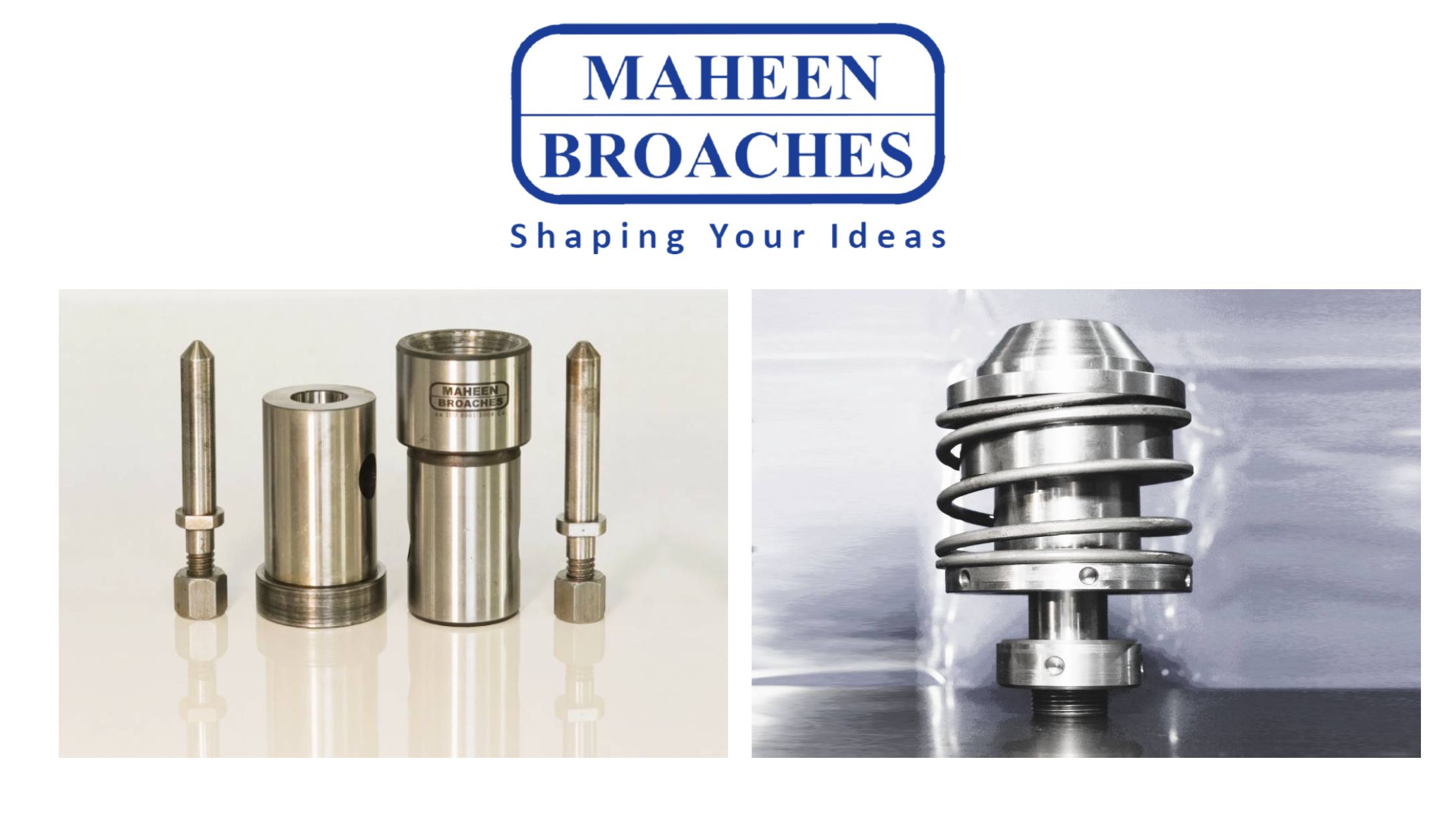
In the high-stakes world of industrial manufacturing, the efficiency of a broaching operation is often measured by its precision, repeatability, and cycle speed. While the broach tool itself often gets the spotlight, the unsung heroes of the process are the Puller and Retriever assemblies.
At Maheen Broaches, we understand that a broaching machine is only as reliable as its smallest component. Puller-retrievers are the mechanical “hands” of the machine, and their performance directly dictates your plant’s throughput.
Here is why Puller-Retriever systems are critical for maintaining efficient, safe, and cost-effective broaching operations.
1. Facilitating the Automated Cycle
The primary role of a puller-retriever system is to automate the handling of the broach tool. In a typical downward or upward stroke, the Retriever lowers the tool into position, the Puller grabs the shank to execute the cut, and the retriever then “retrieves” the tool to return it to the starting position.
Without a synchronized, high-quality puller-retriever setup, this process would require manual intervention. Automation doesn’t just speed up the cycle; it ensures that every stroke is identical, allowing for 24/7 production capabilities.
2. Protecting Expensive Broach Tooling
A high-speed broach tool is a significant investment. One of the most common causes of tool breakage is “tool drop” or misalignment during the hand-off between the puller and the retriever.
Precision Grip: Quality pullers are engineered with exact tolerances to grip the pull end of the broach securely. If the grip is loose, the tool can chatter, leading to poor surface finish or catastrophic tool failure.
Controlled Retrieval: The retriever must hold the tool perfectly vertical. Any slight tilt during the return stroke can cause the tool to strike the workpiece or the machine table, leading to chipped teeth.
3. Eliminating Operator Error and Improving Safety
Manual handling of heavy, sharp broach tools is a safety hazard. Puller-retriever systems eliminate the need for operators to reach into the machining zone to reset the tool. By keeping the “human element” out of the mechanical cycle, you significantly reduce the risk of workplace injuries and the inevitable errors that come with manual tool loading.
4. Minimizing Non-Cut Time
Efficiency in manufacturing is found in the seconds saved between cuts. A high-performance retriever system is designed for rapid movement and instantaneous engagement.
Rapid Reset: High-speed retrievers reduce the “dead time” when the machine isn’t cutting.
Quick-Change Capabilities: Modern puller-retriever designs allow for faster tool changeovers, meaning your machine spends more time producing parts and less time sitting idle during setup.
5. Ensuring Concentricity and Accuracy
If a puller does not pull the tool perfectly straight, the resulting hole or slot will be eccentric. Precision-ground pullers ensure that the force applied to the broach is perfectly axial. This is critical for meeting the tight tolerances required in aerospace, automotive, and defense manufacturing.
When the puller and retriever are perfectly aligned, you eliminate the “wobble” that causes dimensional inaccuracies and high scrap rates.
Conclusion: The Backbone of Your Broach Machine
A broaching operation is a chain of events, and the puller-retriever system is the link that holds it together. By investing in high-quality, durable assemblies from Broach Machine Tools, you aren’t just buying parts—you are buying insurance against downtime, tool breakage, and safety incidents.
Is your current setup causing delays?
Whether you need standard replacements or custom-engineered solutions for specialized broaching, our team is ready to help.
Explore our Puller and Retriever Solutions or contact us today for a technical consultation to optimize your machining cycle.