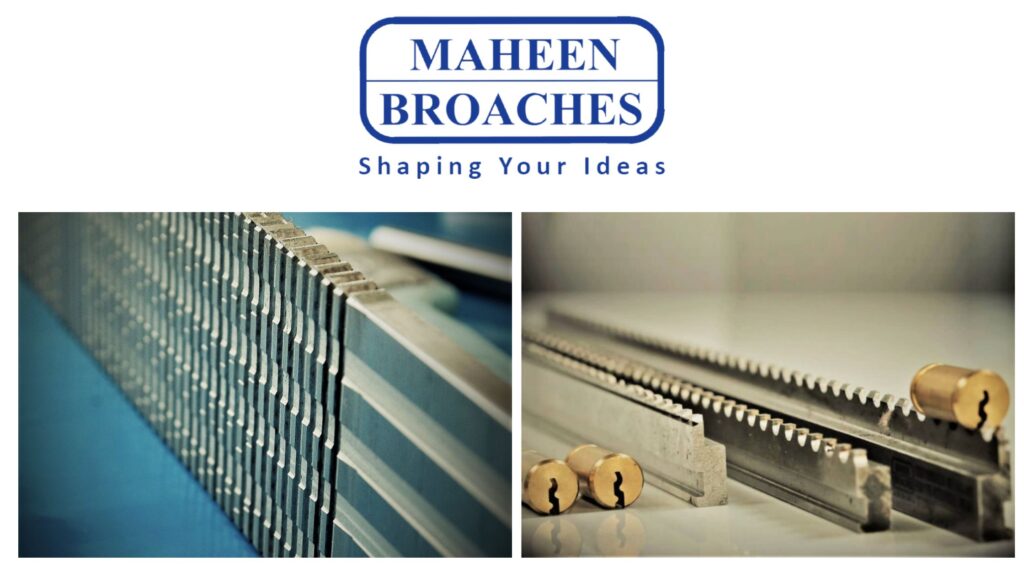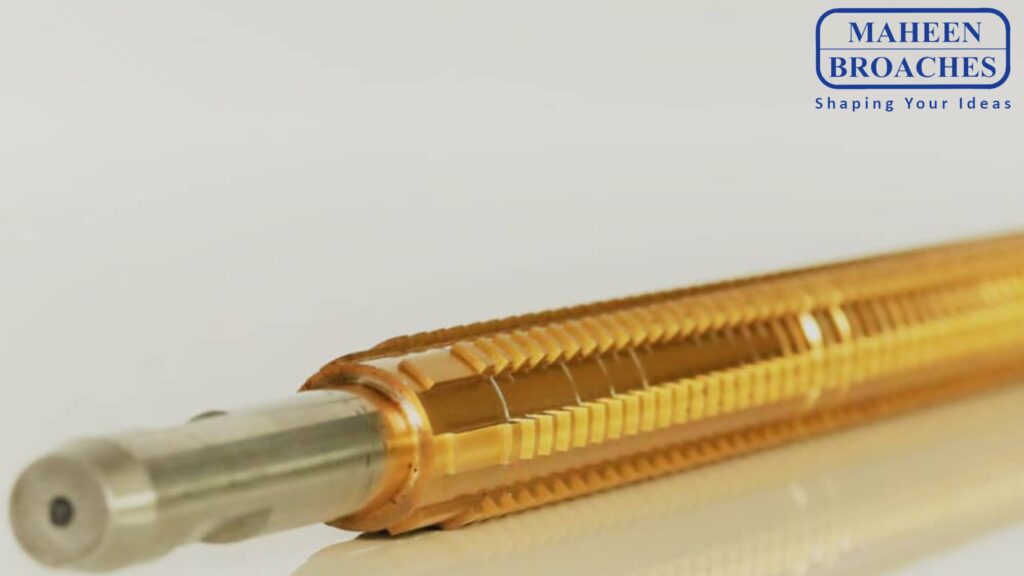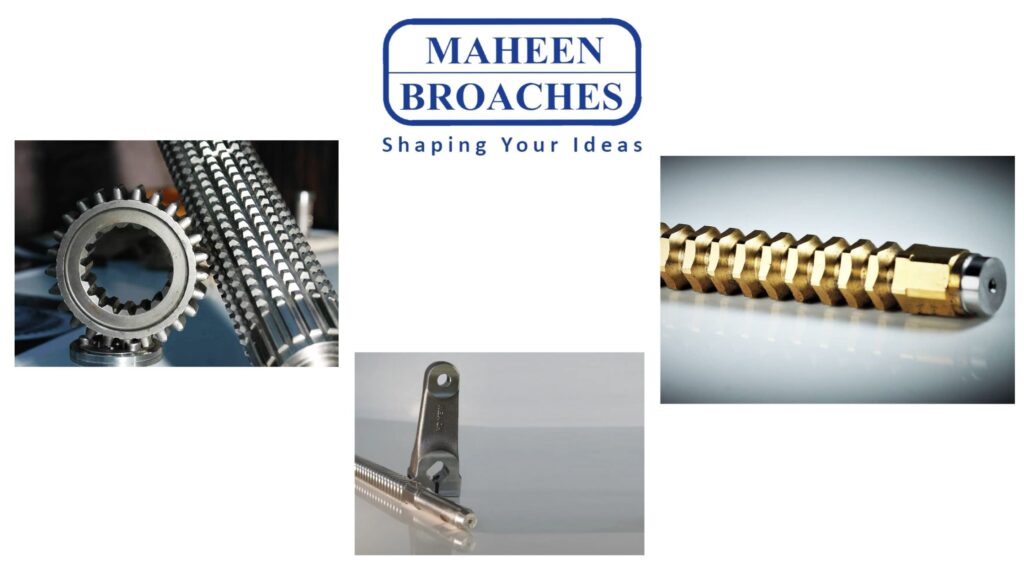
In the world of precision manufacturing, the broach tool is the heart of your operation. It delivers the complex internal profiles and surface finishes that other methods simply can’t match. But like any cutting tool, it eventually loses its edge.
Running a dull broach isn’t just inefficient-it’s dangerous for your machine and disastrous for your part quality. A dull tool increases stress on the machine ram, ruins surface finishes, and can even shatter mid-cut, leading to costly downtime.
At Maheen Broaches, we know that timing is everything. You want to maximize the life of your tool without crossing the line into failure. Here are the 5 unmistakable signs that your broach tool is screaming for a resharpening.
1. Poor Surface Finish (Tearing and Galling)
The first and most obvious indicator is right on the part itself. A sharp broach cuts cleanly, shearing the metal and leaving a smooth, polished surface.
As the cutting edges dull, the tool stops “shearing” and starts “plowing” or “rubbing” the material. This results in a rough, torn appearance, often referred to as galling. If you notice chatter marks, scoring, or a finish that looks cloudy rather than crisp, your tool has lost its primary cutting clearance.
2. Increased Tonnage or Cutting Force
Your broaching machine tries to tell you when it’s struggling. If your machine is equipped with a pressure gauge or load monitor, keep a close eye on it.
A sharp tool requires a specific, consistent amount of force to pull or push through the workpiece. As the teeth blunt, the friction increases drastically. If you see your hydraulic pressure spiking 10-20% higher than normal for the same part material, stop immediately. Forcing a dull tool through a part puts massive strain on the pull head and the machine frame.
3. Drifting Tolerances (Parts Are Undersized)
Broaching is famous for its repeatability. If your parts start drifting out of tolerance, the tool is the prime suspect.
When broach teeth wear down, they lose size-specifically on the “land” or the top of the cutting tooth. This radial wear means the tool is physically smaller than it was when it was sharp. Consequently, internal splines or holes will come out tighter (undersized) than the specification requires. If your “Go” gauge stops going, it’s time to regrind.
4. Visible Wear Land on the Teeth
Sometimes, you don’t need to run a part to know there’s a problem-you just need a magnifying glass. Take a close look at the cutting edges of the broach teeth under good lighting.
A sharp tooth has a crisp, defined intersection between the face and the top land. A dull tooth will show a rounded, shiny strip along the cutting edge, known as the “wear land.” If this shiny strip exceeds 0.005 to 0.010 inches, the tool needs servicing. Waiting until you see chipped corners or massive craters means you may have waited too long, requiring excessive material removal during sharpening to fix it.
5. Unusual Noise or Vibration
A healthy broaching operation has a rhythmic, consistent sound-often a steady “crunch” or hum.
When a tool dulls, the cutting action becomes erratic. You might hear:
Squealing or screeching: Indicates rubbing instead of cutting.
Thumping or banging: Indicates the tool is grabbing and releasing (chatter) rather than cutting smoothly.
Vibration: If you can feel unusual tremors in the machine floor or the fixture, the cutting resistance has become too high.
Don’t Let a Dull Tool Slow You Down
Resharpening is not just a repair; it is a reset for your production quality. However, it must be done correctly. Grinding too much off the face can ruin the tooth profile, while grinding too little won’t restore the edge.
At Maheen Broaches, we specialize in precision broach resharpening and reconditioning. We restore the original geometry of your tool, ensuring it performs like new and extends the lifespan of your expensive broaching assets.